What Affects STD Test Accuracy? Timing, Sample Handling, and Common Real-World Factors Explained
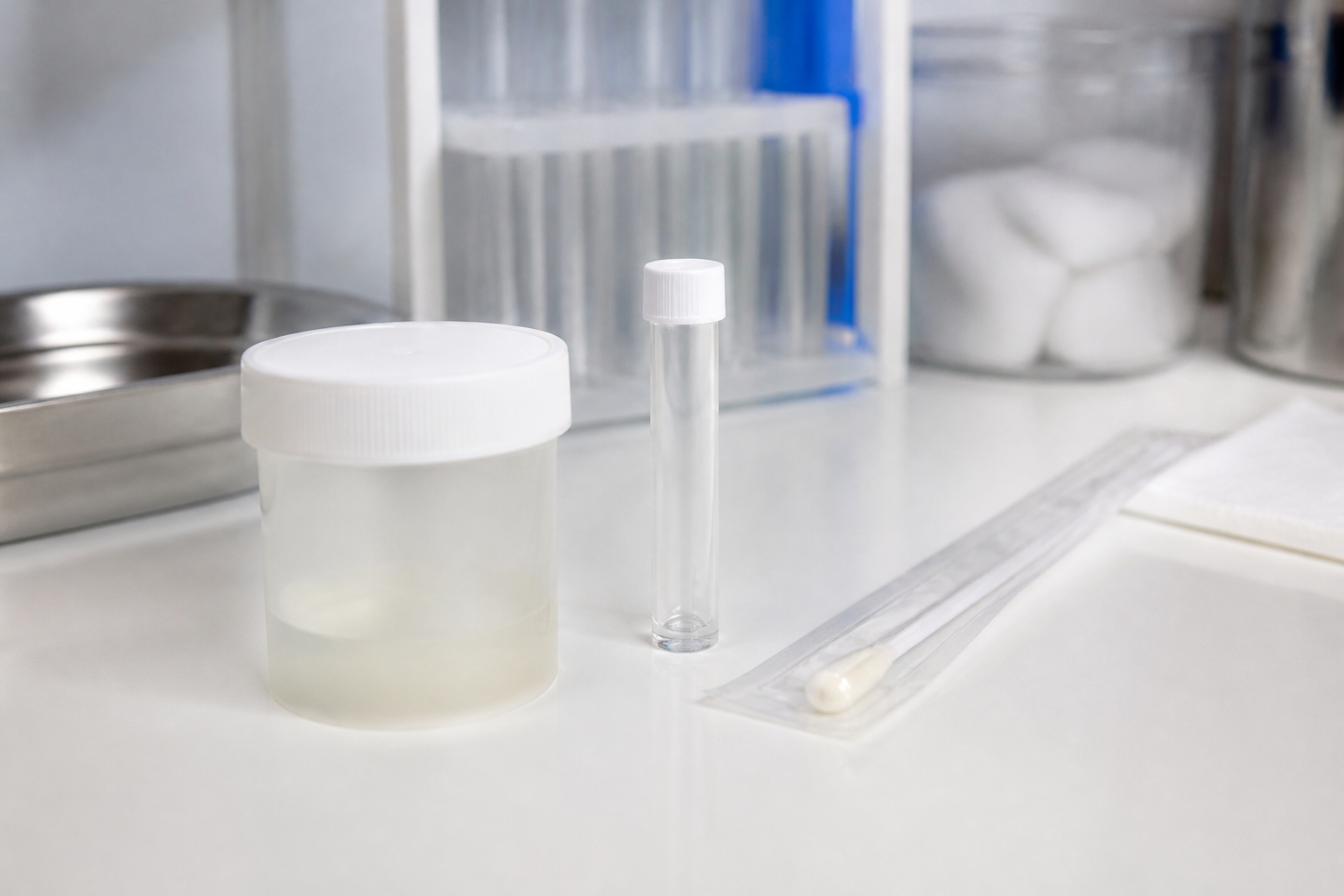
STD test accuracy depends on timing, infection, test type, collection site, specimen quality, handling, symptoms, and clinical context.
Key takeaways
- There is no single accuracy percentage or waiting period that applies to every STI test.
- Testing too soon after exposure can produce a negative result during a window period.
- The specimen must come from the body site and be collected in the way specified for that test.
- Incorrect collection, delays, unsuitable storage, or transport problems can affect some results.
- Symptoms, recent treatment, and clinical context can change how a result should be interpreted.
The short answer is that STD test accuracy depends on more than the test name. Timing after exposure, the infection being assessed, the body site sampled, specimen quality, collection technique, transport and storage, symptoms, and the test’s intended use can all matter. A negative result is not automatically conclusive if testing occurred during a window period, sampled the wrong site, or used an inadequate specimen.
The main factors that affect STD test accuracy
- Time since exposure and the test’s window period
- The infection and test method being used
- The anatomical site exposed and sampled
- Specimen type and collection technique
- Transport, storage, labeling, and processing
- Symptoms, lesions, and recent treatment
- Whether the result is screening, diagnostic, positive, negative, or invalid
1. Timing after exposure
A test may not detect an infection immediately after exposure. This is called a window period: the time between infection and when a particular test can reliably detect its marker. Window periods differ by infection and test type, so a negative result obtained soon after exposure may need repeat testing.
HIV illustrates why timing must be test-specific. The CDC reports approximate window periods of 10–33 days for nucleic acid tests, 18–45 days for laboratory antigen/antibody tests, 18–90 days for rapid antigen/antibody tests, and 23–90 days for antibody tests. These ranges are not a universal schedule for all HIV tests or other STIs; check the instructions for the exact test and discuss follow-up with a clinician when appropriate.
Syphilis testing can also be negative early because antibodies take time to develop. CDC guidance states that antibodies detected by nontreponemal and treponemal tests may take up to two weeks after primary infection to develop. Interpretation depends on the test algorithm and clinical context, not on one isolated number of days.
2. The infection and test method
Different infections require different kinds of testing. Chlamydia and gonorrhea are commonly assessed with nucleic acid amplification tests, or NAATs. HIV testing may look for antigen, antibodies, or viral genetic material. Syphilis testing uses serology, while herpes testing can depend heavily on whether a lesion is present. Because each method detects a different marker, the timing and limitations differ.
A screening result is not always the same as a final diagnosis. Some screening approaches require additional testing or clinical correlation. Do not treat an invalid result as negative or positive; follow the laboratory or product instructions about repeat collection or professional evaluation.
3. The body site that was exposed and sampled
A urine or genital test does not necessarily assess an exposure in the throat or rectum. The CDC identifies blood, urine, and swabs from the vagina, throat, or rectum as possible specimen types, depending on the infection and testing situation. If the exposure involved an extragenital site, ask a clinician whether that site should be tested.
For chlamydia, CDC guidance identifies vaginal swabs and first-catch urine as important urogenital specimens and recommends NAATs. Patient-collected vaginal swabs can perform comparably to clinician-collected swabs when the assay is cleared for that use. This does not mean every swab or collection method is interchangeable.
4. Specimen type and collection technique
The specimen must match the test’s instructions. For some chlamydia and gonorrhea NAATs, CDC laboratory guidance describes first-catch urine rather than midstream urine and notes that the time since last urination can matter. These requirements are assay-specific, so do not assume that instructions for one kit apply to another.
Collection errors can include using the wrong specimen type, collecting too little material, touching a swab incorrectly, missing a lesion, or failing to follow the stated sequence. The FDA emphasizes that following labeled instructions is essential for accurate home-test results. If a control indicator fails or the instructions say the specimen was insufficient, the result may be invalid rather than negative.
5. Transport, storage, and sample handling
After collection, a specimen may still be affected by transport time, temperature, storage conditions, labeling, collection media, or delays before processing. CDC laboratory materials describe requirements that can vary by test, including transport temperature and timing, and warn against inappropriate delays or freeze-thaw conditions.
The FDA has also warned that collection quality, shipping, specimen stability, elapsed time, and transport conditions can affect self-collected HIV blood-sample testing. Products or uses that have not been reviewed for the intended purpose may not have FDA-reviewed assurances of reliability. Do not assume that every mail-in, home, rapid, or self-collected test has equivalent performance.
6. Symptoms, lesions, and recent treatment
Symptoms can change which test is most useful. For herpes, CDC guidance states that culture sensitivity decreases as lesions heal, random genital swabs without lesions have low sensitivity, and a negative test does not always exclude infection. A clinician may need to evaluate a current lesion and select testing based on its appearance and timing.
Recent antibiotics or other treatment can complicate interpretation for some molecular tests. This does not mean antibiotics always cause false-negative STI results. CDC materials also explain that nucleic acid may persist after gonorrhea treatment, so a test performed after treatment cannot automatically determine whether infection is still present. Ask a clinician or follow the specific test guidance rather than applying a general rule.
How to improve the usefulness of an STD test
- Record when the possible exposure occurred and tell the clinician or testing service.
- Identify every exposed body site, including genital, oral, and rectal sites.
- Use the specimen type and collection method specified for the exact assay.
- Read all instructions before collecting a home or self-collected specimen.
- Check requirements for urine collection, swab technique, storage, shipping, and timing.
- Do not interpret an invalid result as negative or positive.
- Tell a clinician about symptoms, lesions, pregnancy, known exposure, or recent treatment.
- Ask whether repeat or site-specific testing is needed after an early negative result.
When to seek professional evaluation
Seek professional evaluation for symptoms, a known exposure, pregnancy, suspected HIV exposure, or concerning sores or lesions, even if an initial test is negative. Testing is not a substitute for urgent care when an exposure may be time-sensitive. Screening recommendations also vary according to population and risk; the USPSTF does not establish one universal schedule or accuracy rule for every person.
The bottom line
The most reliable interpretation comes from matching the infection, test, timing, exposed body site, specimen, collection method, handling process, and clinical context. A negative result can be reassuring when testing is appropriate, but it may not exclude infection when testing was too early, the wrong site was sampled, the specimen was inadequate, or symptoms require a different evaluation.
Frequently asked questions
What is the biggest factor affecting STD test accuracy?
Timing is a major factor, but accuracy also depends on the infection, test method, exposed body site, specimen quality, collection technique, handling, symptoms, and clinical context.
Can an STD test be negative if it was taken too soon?
Yes. Testing during a window period may produce a negative result even when infection is present. The timing and need for repeat testing depend on the infection and exact test.
Does urine testing check every exposed body site?
No. A urine or genital test does not necessarily assess throat or rectal exposure. Site-specific testing may be needed based on exposure history.
Can incorrect sample handling affect a result?
Yes. Collection quality, transport time, temperature, storage, labeling, and specimen stability can affect some tests. Follow the exact laboratory or kit instructions.
Does a negative herpes test rule out herpes?
No. CDC guidance notes that herpes test performance depends on lesion status and specimen timing, and a negative test does not always exclude infection.
Do antibiotics always cause a false-negative STI test?
No. Effects vary by infection, test, timing, and treatment. Do not apply a universal rule; tell the clinician about recent treatment.
Sources & references
- CDC: Getting Tested for HIV
- CDC: Getting Tested for STIs
- CDC: Chlamydial Infections—STI Treatment Guidelines
- CDC: Recommendations for Laboratory-Based Detection of Chlamydia trachomatis and Neisseria gonorrhoeae
- CDC: Laboratory Recommendations for Syphilis Testing, United States, 2024
- CDC: Herpes—STI Treatment Guidelines
- FDA: How You Can Get the Best Results With Home Use Tests
- FDA: Important Information on Use of Unapproved HIV Blood Sample Self-Collection Kits
- USPSTF: Chlamydia and Gonorrhea Screening
- USPSTF: Syphilis Infection in Nonpregnant Adolescents and Adults—Screening
Sources are provided for general educational purposes only. This article is not medical advice. Consult a qualified healthcare professional with any health concerns.
Ready to compare testing options?
Use our independent, educational comparisons to understand your online STD/STI testing options.
View Provider Testing OptionsAffiliate link — we may earn a commission if you choose a provider through this link, at no extra cost to you. Pricing, turnaround and availability are set by the provider and can change.