Can You Eat or Drink Before an STD Test? Fasting and Preparation Requirements Explained
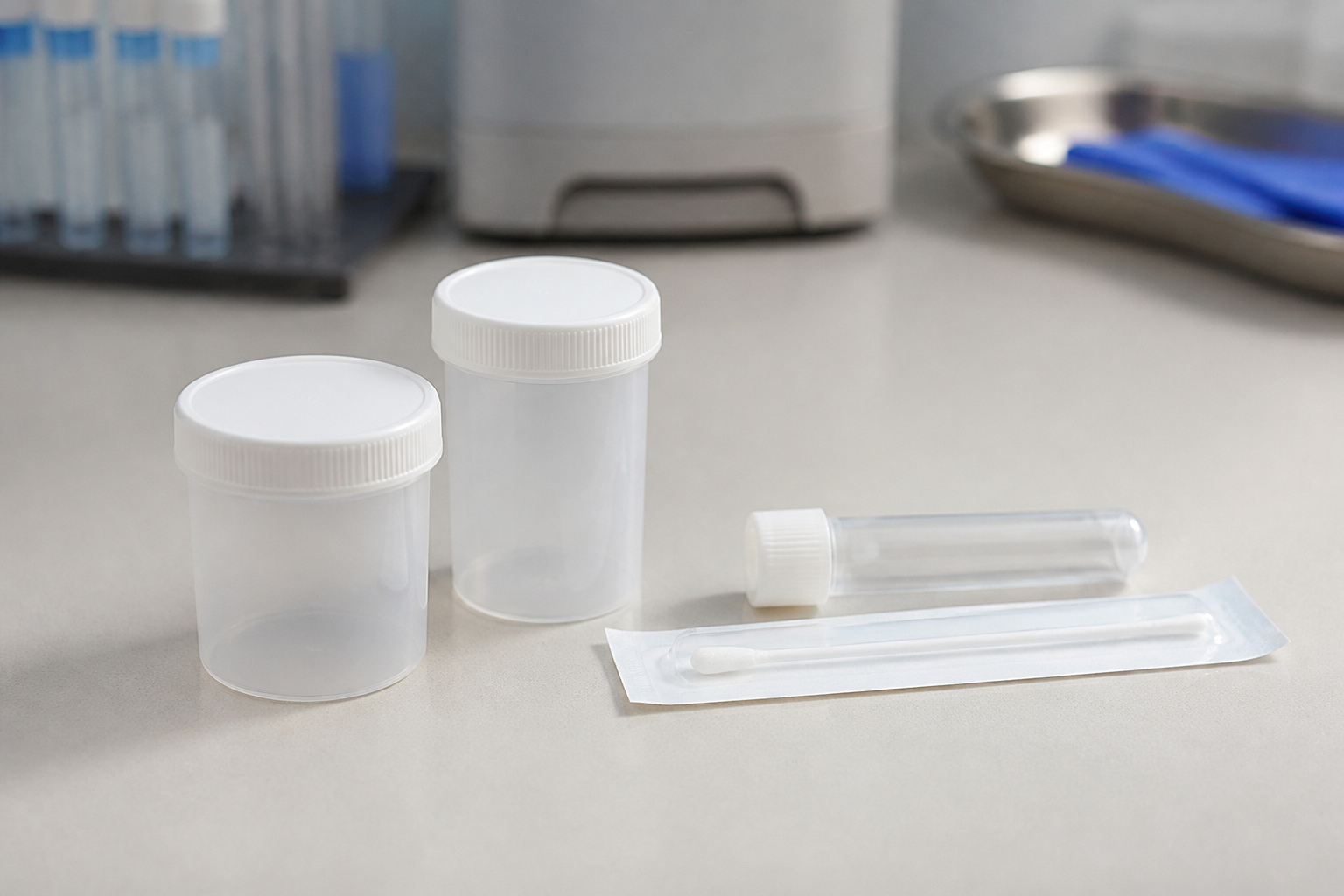
Usually, you can eat and drink before routine STD or STI testing. Learn when fasting is unnecessary, why some urine tests require avoiding urination, and the special preparation rule for an oral-fluid HIV self-test.
Key takeaways
- Usually, you can eat and drink before routine STD or STI testing; fasting is generally not required.
- Preparation depends on the specimen and test method, which may involve blood, urine, or swabs.
- Some urine-based chlamydia and gonorrhea NAATs require avoiding urination for at least one hour before collection.
- The FDA package insert for the OraQuick oral-fluid HIV self-test says not to eat, drink, or use oral-care products for 30 minutes before testing.
- The instructions from the ordering clinician, collection site, laboratory, or test kit take priority.
Usually, yes—you can eat and drink before most routine STD or STI tests. Fasting is generally not required for common STI testing, but preparation is not identical for every test. The specimen may be blood, urine, or a swab from a particular body site, and each method can have different instructions.
Why there is no single STD test preparation rule
“STD test” can refer to several different tests rather than one universal examination. The Centers for Disease Control and Prevention explains that STI testing may use blood, urine, or swabs from sites such as the vagina, throat, or rectum. The test selected can depend on the infection being evaluated, symptoms, sexual history, and the body site involved.
Chlamydia and gonorrhea screening commonly uses nucleic acid amplification tests, or NAATs. Depending on the situation, these tests may use urine or urogenital, rectal, or pharyngeal specimens. A blood test and a urine test therefore should not be assumed to have the same preparation requirements.
Can you eat and drink before a blood-based STI test?
For many common blood tests, including STI testing, fasting is typically not required. Labcorp’s general preparation guidance states that many common blood tests, including STI tests, usually do not require fasting. Unless the ordering clinician or laboratory gives you different instructions, eating a normal meal and drinking fluids are generally compatible with routine blood-based STI testing.
However, do not apply this guidance to every blood draw automatically. A clinician may order more than one type of test at the same appointment, and another test could have separate preparation requirements. Follow the complete instructions provided for your appointment rather than relying only on a general STI rule.
What preparation is needed for a urine STI test?
Some urine-based chlamydia and gonorrhea tests use first-void, first-catch, or first-portion urine. Mayo Clinic Laboratories instructs patients providing a urine specimen for one chlamydia and gonorrhea NAAT not to urinate for at least one hour before collection and to collect the first portion of the urine stream. Labcorp gives similar first-void urine instructions for a chlamydia and gonorrhea NAAT.
This is different from fasting. You may be allowed to eat and drink while still being asked not to urinate for a period before collecting the specimen. The exact collection method can differ from routine clean-catch urine collection, so read the instructions carefully.
Do swab tests require fasting?
Swab-based testing may collect a specimen from the vagina, throat, rectum, or another site, depending on the infection and exposure being evaluated. Because preparation depends on the specimen and test, there is no universal fasting rule for all swab tests. If a throat or oral specimen is planned, ask the collection site whether it has specific instructions before the appointment.
A urine specimen cannot automatically substitute for a swab from another body site. For example, testing decisions may involve the sites where exposure or symptoms occurred. The Centers for Disease Control and Prevention and the U.S. Preventive Services Task Force both describe STI testing as involving different specimen types and sites.
Important exception: the OraQuick oral-fluid HIV self-test
The OraQuick oral-fluid HIV self-test has a specific food and drink restriction. The FDA package insert for the OraQuick HIV Self-Test instructs users not to eat, drink, or use oral-care products for 30 minutes before testing. The FDA identifies OraQuick as an at-home oral-fluid antibody test, so its preparation instructions are tied to that product and specimen type.
This rule should not be generalized to every HIV test or every STI test. HIV self-testing can use oral fluid or a finger-stick method, and the CDC advises users to follow the directions included with the test kit. A blood-based laboratory test and an oral-fluid self-test may therefore have different preparation instructions.
What should you avoid before an STD or STI test?
- Do not fast unless your specific instructions say fasting is required.
- For a urine chlamydia or gonorrhea NAAT, follow any instruction to avoid urinating before collection.
- For an oral-fluid HIV self-test, follow the product instructions about food, drinks, and oral-care products.
- Do not assume that a standard panel includes every STI or tests every potentially exposed body site.
- Do not substitute general online guidance for instructions from the ordering clinician, collection site, laboratory, or test manufacturer.
A practical preparation checklist
- Confirm which tests are being performed and whether specimens will be blood, urine, swabs, or oral fluid.
- Read the appointment, laboratory, or kit instructions before eating, drinking, brushing your teeth, or urinating.
- If a urine specimen is required, check whether the instructions specify first-void urine or avoiding urination for at least one hour.
- If an oral-fluid HIV self-test is being used, check the product instructions and observe the 30-minute restriction described for OraQuick.
- Ask the ordering clinician, collection site, or test manufacturer if the instructions are unclear.
- Bring up symptoms, a known exposure, pregnancy, or a recent possible HIV exposure rather than relying only on preparation guidance.
When to contact a healthcare professional
Preparation advice is general information, not individualized medical advice. If you have symptoms, know that you were exposed, are pregnant, or are concerned about a recent HIV exposure, contact a healthcare professional promptly. Preparation instructions do not replace an evaluation, appropriate testing decisions, or follow-up care.
Also remember that a test panel may not cover every infection or body site. The appropriate tests depend on the clinical situation, the type and timing of exposure, symptoms, and the specimen collected. Ask the ordering clinician what the selected tests evaluate and how to interpret the results.
Bottom line
For most routine STD or STI testing, you can usually eat and drink beforehand, and fasting is not generally required. The main preparation issue for some urine-based chlamydia and gonorrhea tests is avoiding urination for at least one hour before collection. An important exception is the OraQuick oral-fluid HIV self-test, which requires avoiding food, drinks, and oral-care products for 30 minutes before use. Always follow the instructions for your specific test.
Frequently asked questions
Can I eat before an STD test?
Usually, yes. Most routine STI testing does not require fasting, but the instructions for your specific test, laboratory, or collection site control.
Can I drink water before an STI test?
Routine STI testing generally does not require food or drink restrictions. However, follow the specific instructions for your test. Some urine tests focus on when you last urinated rather than what you drank.
Do I need to avoid urinating before a urine STD test?
Some chlamydia and gonorrhea urine NAATs request first-void or first-catch urine and recommend not urinating for at least one hour before collection. This does not apply automatically to every urine test.
Do swab-based STI tests require fasting?
There is no universal fasting rule for swab tests. Requirements depend on the specimen site and test method, so check with the collection site or ordering clinician.
Can I eat before an OraQuick HIV self-test?
The FDA package insert says not to eat, drink, or use oral-care products for 30 minutes before using the OraQuick oral-fluid HIV self-test.
Does every STD panel test for every STI?
No. Panels vary by provider, symptoms, exposure sites, sexual history, and the tests ordered. Ask what your selected tests include.
Sources & references
- Getting Tested for STIs
- CGRNA: Chlamydia trachomatis and Neisseria gonorrhoeae Nucleic Acid Amplification
- Chlamydia/Gonococcus, NAA With Confirmation
- Fasting for Blood Work: What to Know Before Your Test
- Package Insert - OraQuick HIV Self-Test
- Information regarding the OraQuick In-Home HIV Test
- Self Testing
- Recommendation: Chlamydia and Gonorrhea Screening
Sources are provided for general educational purposes only. This article is not medical advice. Consult a qualified healthcare professional with any health concerns.
Ready to compare testing options?
Use our independent, educational comparisons to understand your online STD/STI testing options.
View Provider Testing OptionsAffiliate link — we may earn a commission if you choose a provider through this link, at no extra cost to you. Pricing, turnaround and availability are set by the provider and can change.