False Positives and False Negatives in STD Testing: Causes and What to Do Next
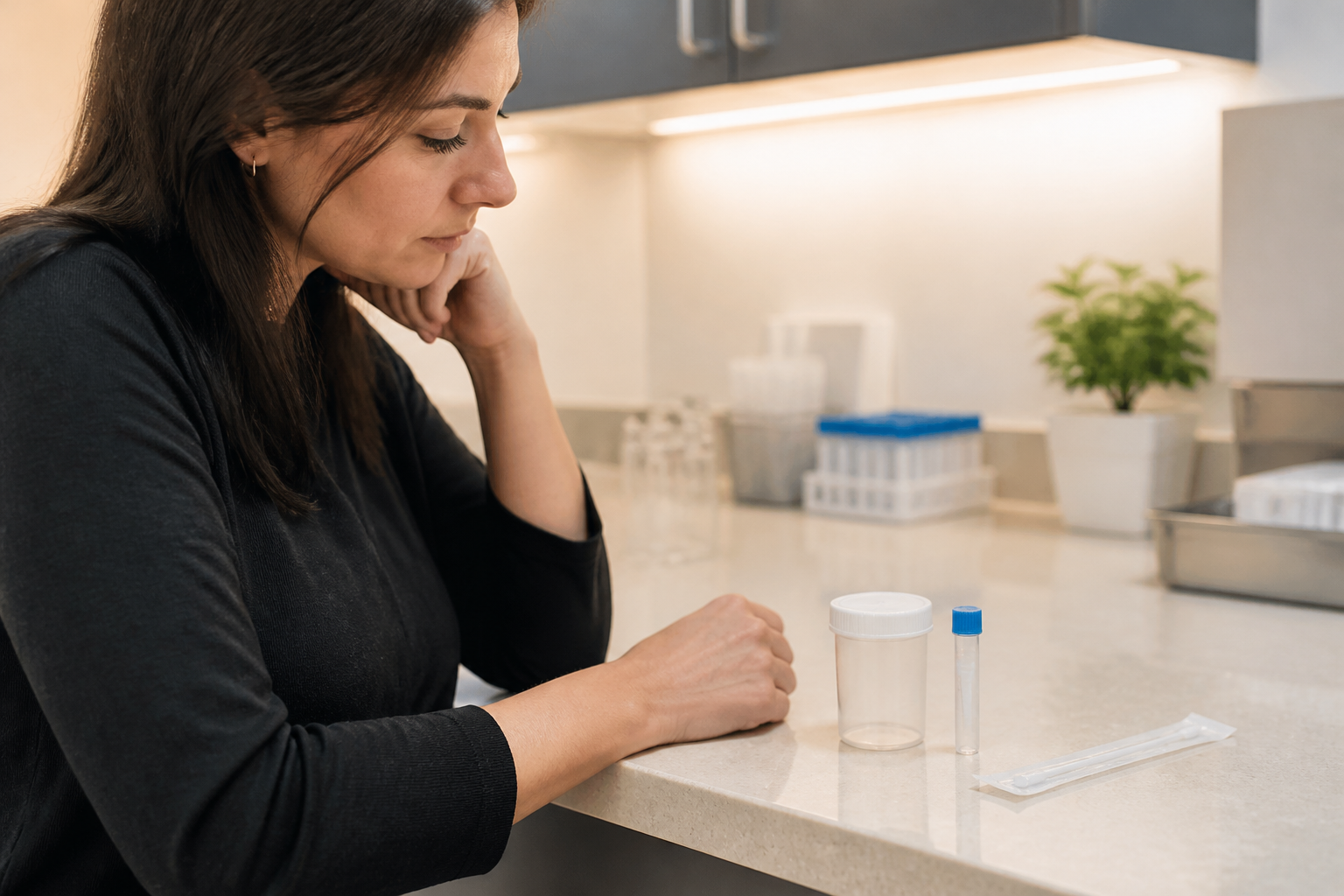
A positive or negative STD test may need context. Learn why results can be inaccurate and what follow-up testing may be appropriate.
Key takeaways
- A preliminary or reactive result does not always establish an infection; some tests require supplemental or confirmatory testing.
- A negative result may not exclude infection if testing occurred soon after exposure or used an unsuitable specimen or anatomical site.
- The correct next step depends on the infection, test method, specimen, timing, symptoms, and clinical context.
- Do not start or stop treatment based only on an unexpected screening or at-home result.
A false positive STD test means a test indicates an infection that follow-up evaluation does not confirm. A false negative means a test does not detect an infection that is present. Neither term should be assumed from a single unexpected result. Test interpretation depends on the infection being tested, the assay, the specimen, the anatomical site, the timing after exposure, and the person’s likelihood of infection.
The practical answer is to pause before drawing conclusions: identify exactly what was tested, contact the testing provider or a clinician, and ask whether supplemental, confirmatory, or repeat testing is appropriate. A reactive HIV, syphilis, herpes, or hepatitis C screening result is not automatically a confirmed diagnosis.
Why can an STD test be falsely positive?
False-positive results can occur for different reasons. Some tests detect markers that need a second method for confirmation. Other results can be affected by cross-reactivity, recent treatment, specimen or collection issues, or the lower positive predictive value that can occur when testing a population with a low likelihood of infection. This does not mean a positive result should be dismissed; it means the result should be interpreted through the testing algorithm recommended for that infection.
Why can an STD test be falsely negative?
A negative result may be unreliable when testing occurs before the test can detect a recent infection. False negatives may also relate to the specimen collected, the anatomical site tested, collection technique, or the particular test method. For that reason, a negative result does not always rule out infection when exposure was recent, symptoms are present, or a site that may have been exposed was not tested.
Examples by infection and test type
- HIV: A reactive rapid or laboratory screening result is preliminary and requires supplemental testing. Negative antibody or rapid testing can miss acute infection when testing occurs soon after exposure; HIV RNA testing may be considered when recent exposure or acute infection is suspected.
- Syphilis: Diagnosis generally uses both nontreponemal and treponemal tests. Using only one type can produce false-positive or false-negative interpretations. False-positive nontreponemal results have multiple possible causes, including pregnancy, other infections, vaccinations, autoimmune conditions, injecting drug use, and older age.
- Chlamydia: A nucleic acid amplification test performed less than four weeks after treatment can remain positive because of nonviable organisms. A positive result in that setting needs clinical interpretation rather than an assumption that treatment failed or reinfection occurred.
- Gonorrhea and chlamydia: Nucleic acid amplification test performance varies with specimen type, collection method, anatomical site, and population. Testing may need to reflect the sites that were exposed; genital testing does not automatically evaluate every other site.
- HSV-2: Blood testing can be falsely negative early after infection and falsely positive at low index values. When appropriate, CDC recommends confirmatory testing with a different method before interpreting a low-positive result. Herpes testing is not necessarily included in a general STI panel.
- Hepatitis C: A reactive antibody result indicates past or current exposure but does not establish current infection. HCV RNA testing is needed to determine whether current infection is present. Recent exposure and immunocompromise can contribute to a false-negative antibody result.
Timing and the testing window
There is no single window period that applies to every STI or every test. HIV detection depends on the test type and time since exposure. A negative result obtained early may need to be discussed with a clinician, especially when recent exposure or symptoms raise concern. The same principle applies more broadly: ask the testing provider how the collection date relates to the exposure date and whether additional testing is appropriate.
Specimen type and anatomical site matter
A test is designed for particular specimens and sites. Urine, blood, and swabs do not answer identical questions, and a genital specimen may not detect an infection at an exposed throat or rectal site. CDC guidance notes that patient-collected specimens can be appropriate for some gonorrhea testing when instructions are followed, while test selection varies by anatomical site. The USPSTF also reports that false-positive and false-negative rates for chlamydia and gonorrhea testing vary by site, population, and collection method.
What to do after an unexpected result
- Save the report and record the test name, result wording, specimen type, collection date, and anatomical site.
- Note when the possible exposure occurred and whether symptoms, lesions, pregnancy, or a relevant medical condition are present.
- Ask the testing provider or a clinician whether the result is preliminary, reactive, positive, negative, indeterminate, or inconclusive.
- Ask whether supplemental or confirmatory testing is required. The appropriate method differs by infection and assay.
- If the result was negative but exposure was recent, symptoms continue, or the tested site did not match the exposure, ask whether further evaluation is needed.
- Do not begin, stop, or change medication based only on an at-home or screening result unless a qualified clinician advises you to do so.
How to reduce avoidable testing errors
For home-use tests, follow the instructions exactly, check that the test is authorized for its intended use, confirm that it is unexpired, and follow storage requirements. Collect the specimen as directed and contact a clinician when the result seems inconsistent with symptoms or exposure history. These steps cannot eliminate every false result, but they can reduce errors related to collection, handling, or use.
A result is information, not the whole diagnosis
An STD panel may not include every infection, specimen site, or test method. A person’s symptoms, exposure history, timing, and medical context can affect what testing is useful. The safest interpretation is therefore not that every positive result is false or every negative result is definitive. Instead, treat an unexpected result as a reason to verify the test pathway and obtain the follow-up recommended for that specific infection.
For broader explanations of timing, specimens, and result terminology, see the sexual health testing guides on SafeSTDTest. Use a qualified healthcare professional for personal diagnosis and treatment decisions.
Frequently asked questions
Can a positive STD test be wrong?
Yes, some results can be falsely positive, but a positive result should not be dismissed. Several infections require supplemental or confirmatory testing, and the appropriate follow-up depends on the infection and test method.
Can a negative STD test be wrong?
Yes. A negative result may not exclude infection when testing occurs soon after exposure, when the wrong anatomical site is tested, or when specimen collection or test limitations affect detection.
What should I do after a false positive STD test?
Contact the testing provider or a clinician, provide the exact report, and ask whether supplemental or confirmatory testing is needed. Do not assume the result is false solely because you have no symptoms or consider your risk low.
Can herpes blood tests be falsely positive?
Yes. CDC guidance identifies false-positive HSV-2 blood-test results at low index values and recommends confirmatory testing with a different method when appropriate.
Does a reactive hepatitis C antibody test mean current infection?
No. A reactive antibody result indicates past or current exposure. HCV RNA testing is needed to determine whether current infection is present.
Do STD panels test for every STI?
No. Panels can differ in the infections tested, specimens collected, anatomical sites evaluated, and methods used. Ask the provider what the panel actually includes.
Sources & references
- CDC STI Treatment Guidelines: HIV
- CDC Getting Tested for HIV
- CDC STI Treatment Guidelines: Syphilis
- CDC STI Treatment Guidelines: Chlamydial Infections
- CDC STI Treatment Guidelines: Gonococcal Infections
- CDC STI Treatment Guidelines: Herpes
- CDC Screening and Diagnosis for Genital Herpes
- CDC Clinical Screening and Diagnosis for Hepatitis C
- USPSTF Evidence Summary: Chlamydia and Gonorrhea Screening
- USPSTF Recommendation: HIV Infection Screening
- FDA: How You Can Get the Best Results With Home Use Tests
Sources are provided for general educational purposes only. This article is not medical advice. Consult a qualified healthcare professional with any health concerns.
Ready to compare testing options?
Use our independent, educational comparisons to understand your online STD/STI testing options.
View Provider Testing OptionsAffiliate link — we may earn a commission if you choose a provider through this link, at no extra cost to you. Pricing, turnaround and availability are set by the provider and can change.