Can You Get an STD Test During Your Period? What to Know About Testing and Menstruation
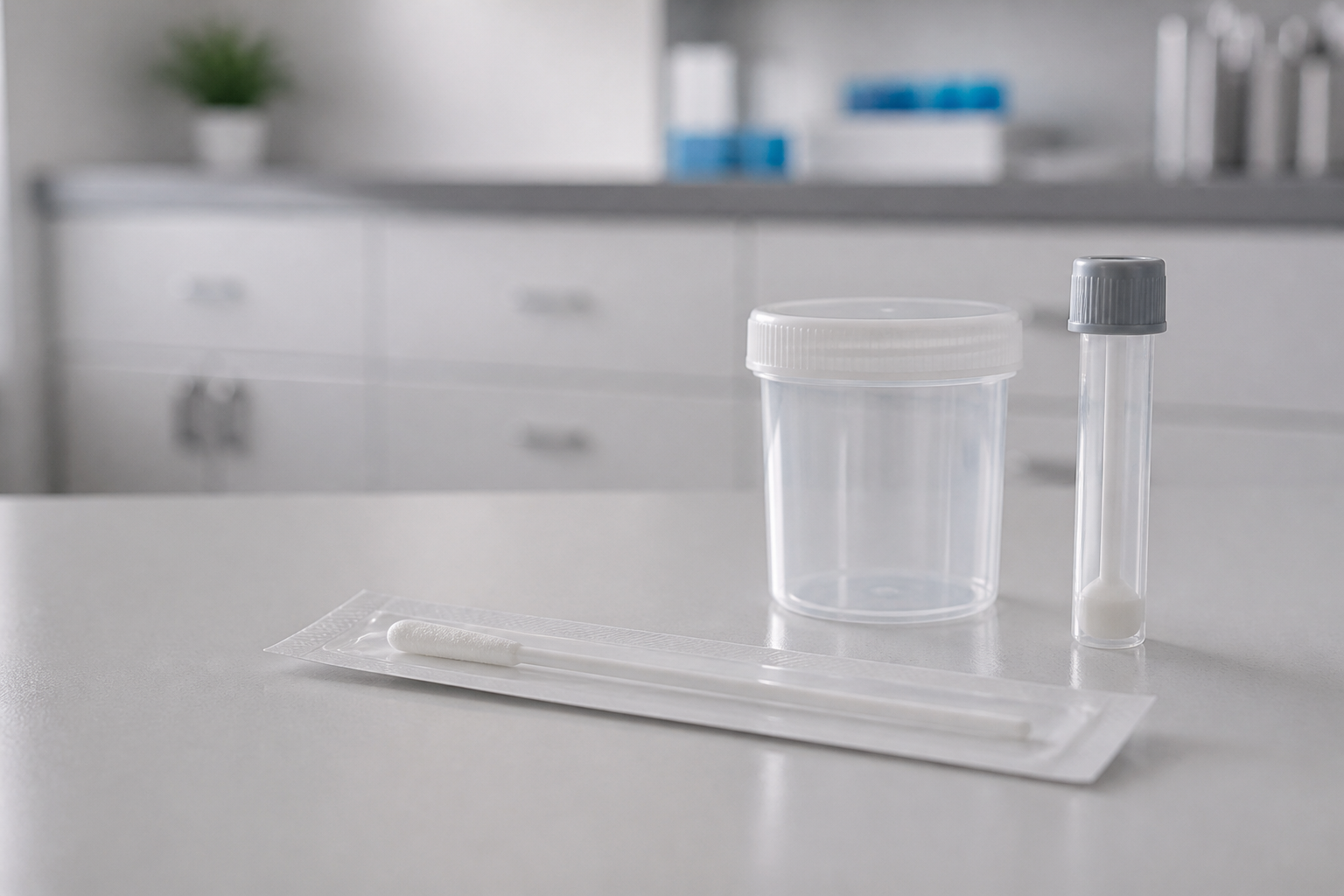
In many cases, you can get an STD test during your period, but accuracy and collection instructions depend on the infection, specimen, assay, and exposure site.
Key takeaways
- Many people can be tested for STIs while menstruating, but the right timing depends on the infection, specimen, assay, exposure site, symptoms, and test instructions.
- Urine and blood tests do not collect menstrual blood, while vaginal or cervical swabs and microscopy may have test-specific considerations.
- Available evidence found no observed effect of menses on certain chlamydia NAATs, but this should not be generalized to every STI test.
- Do not delay time-sensitive testing solely because you have your period; ask the testing site about heavy bleeding or collection concerns.
Yes—often, you can get an STD test during your period. Menstruation does not automatically make STI testing impossible or invalidate every result. However, there is no universal rule for every test. The effect of bleeding, if any, depends on the infection being assessed, the assay, the specimen collected, the anatomic site exposed, and the instructions for the exact test.
Why the type of specimen matters
The Centers for Disease Control and Prevention explains that STI testing may use blood, urine, or swabs from the vagina, throat, or rectum. The appropriate specimen depends on the infection, your anatomy, your symptoms, and the sites involved in sexual exposure. These specimen types are not interchangeable, so a test that is appropriate for one infection or exposure site may not answer every testing question.
- Urine testing collects urine rather than menstrual blood, but the correct collection instructions still matter.
- Blood testing is used for infections for which a blood specimen is appropriate; it does not replace site-specific testing when an exposure involved the throat, rectum, or genital area.
- Vaginal or cervical swabs may be used for certain molecular tests, and the kit or laboratory should specify whether self-collection is allowed.
- Throat or rectal swabs may be appropriate when those sites were exposed, even if a urine or genital test is also collected.
- Microscopy is a different method from molecular testing and may be harder to interpret when blood or other vaginal factors are present.
Can menstrual blood affect a vaginal swab?
Menstrual bleeding does not have one predictable effect on every vaginal or cervical test. For chlamydia, CDC guidance identifies FDA-cleared nucleic-acid amplification tests, or NAATs, using vaginal swabs as an optimal urogenital specimen for people with a vagina. When an assay is appropriately cleared, patient-collected vaginal swabs can be equivalent to clinician-collected swabs.
A study of 3,551 women evaluating chlamydia NAAT performance reported no observed effect from menses. That finding is useful, but it applies to the infection, specimens, and assays studied. It is not evidence that menstrual bleeding has no possible effect on every STI test or every laboratory method.
Some laboratory collection documentation identifies blood as a potential source of polymerase inhibition for at least one PCR methodology, with a possible risk of invalid or false-negative results. This is why the safest approach is to follow the exact collection instructions rather than assume that all vaginal-swab tests work identically during menstruation.
How testing differs by infection
Chlamydia and gonorrhea are commonly evaluated with NAATs. For gonorrhea, CDC guidance supports site-appropriate NAAT or culture specimens, including vaginal, cervical, urine, rectal, and pharyngeal specimens, depending on anatomy and exposure. Menstruation should not determine the testing site; the exposure history should.
For trichomoniasis, FDA-cleared molecular testing is available for vaginal and urine specimens in women. Wet-mount microscopy is a separate method with lower sensitivity and should not be treated as equivalent to a molecular test. CDC notes that clinical evaluation of vaginal symptoms should consider menses and other factors, and microscopy alone may miss trichomoniasis and other infections.
- Ask which infection or infections the test is designed to detect.
- Confirm whether the specimen should be urine, blood, a vaginal or cervical swab, or a swab from another exposure site.
- Read the test instructions for restrictions related to bleeding, collection, storage, and timing.
- Tell the testing service about heavy bleeding, symptoms, pregnancy, or difficulty collecting the specimen.
- Do not assume that a Pap test, pelvic examination, vaginal pH test, or wet mount is a complete STI screen.
Should you wait until your period ends?
Not automatically. Waiting may be reasonable if the specific laboratory or kit instructs you to do so, if heavy bleeding could interfere with collection, or if a clinician recommends a different time. But menstruation alone is not a reason to assume that testing cannot be done.
Testing urgency depends on factors such as the exposure, symptoms, the infection being considered, the test window period, and the site sampled. A negative result may not rule out infection if testing occurred too soon after exposure, the wrong anatomic site was tested, or the specimen was inadequate. Menstrual timing does not remove the need to consider those factors.
What if you have symptoms during your period?
Bleeding, discharge, pelvic discomfort, pain with urination, sores, or other symptoms deserve an appropriate clinical evaluation. Menstrual bleeding should not be used to diagnose the cause of a symptom, and symptoms should not be attributed to an STI without testing or professional assessment. A clinician may consider menstruation, hygiene practices, recent sexual exposure, pregnancy, and other causes when deciding which specimens and tests are appropriate.
Seek medical guidance when symptoms are persistent, severe, or concerning, or when you have a known exposure. If a home or laboratory test is positive, or if concerns continue after a negative result, contact a qualified healthcare professional for follow-up. Do not self-treat based only on symptoms or a test result.
Home collection and laboratory instructions
The U.S. Food and Drug Administration has described a U.S.-authorized home test using a self-collected vaginal swab for chlamydia, gonorrhea, and trichomoniasis. Authorization for a particular product does not mean that every home test or every specimen is validated for use during menstruation. Read the instructions for the exact product and contact the provider or laboratory if your bleeding makes collection difficult.
If a specimen cannot be collected as directed, the result may be invalid or may not answer the clinical question. Follow-up is especially important after a positive result or when concerns persist despite a negative result. Testing at the correct site and at an appropriate time remains important whether or not you are on your period.
When should screening happen?
Screening recommendations are based on factors such as age, sexual activity, pregnancy, anatomy, symptoms, and increased-risk status—not menstrual timing. The U.S. Preventive Services Task Force recommendations for chlamydia and gonorrhea screening do not make the menstrual cycle the deciding factor. Ask a healthcare professional which screening tests fit your anatomy, exposures, and health history.
The bottom line
You can often get an STD test during your period, but accuracy and collection requirements depend on the specific test. Urine, blood, vaginal or cervical swabs, throat or rectal swabs, and microscopy each have different purposes. Evidence for certain chlamydia NAATs found no observed effect from menses, but that result should not be extended to every STI assay. Follow the exact instructions, disclose heavy bleeding and symptoms, and do not delay time-sensitive testing solely because you are menstruating.
Frequently asked questions
Can you get an STD test while on your period?
Often, yes. Whether to proceed depends on the infection, specimen, assay, exposure site, symptoms, and instructions for the exact test. Menstruation alone does not make every STI test invalid.
Does menstrual blood cause a false-positive STD test?
The available evidence does not support a universal claim that menstrual blood causes false-positive STI results. Test performance varies by method, and you should follow the specific laboratory or kit instructions.
Should I wait until my period ends for a vaginal swab?
Not necessarily. Some vaginal-swab tests can be collected during menstruation, but heavy bleeding or test-specific restrictions may matter. Ask the testing service and follow the exact collection directions.
Is urine testing affected by menstruation?
Urine testing collects urine rather than menstrual blood, but collection instructions and the appropriate specimen depend on the infection and exposure site. A urine test does not replace throat, rectal, or genital testing when those sites were exposed.
Can a negative test during my period rule out an STI?
Not always. Results can be affected by the window period, the anatomic site tested, the assay, and specimen quality. Follow professional guidance about whether repeat or additional testing is needed.
Sources & references
- CDC: Getting Tested for STIs
- CDC: Chlamydial Infections
- CDC: Gonococcal Infections
- CDC: Trichomoniasis
- CDC: Vulvovaginal Symptoms and STI Evaluation
- Impact of Patient Characteristics on Performance of NAATs for Chlamydia
- FDA: First Home Test for Chlamydia, Gonorrhea, and Trichomoniasis
- USPSTF: Chlamydia and Gonorrhea Screening
- CDC Laboratory-Based Detection of Chlamydia and Gonorrhea
- Laboratory Collection Instructions for GC/Chlamydia PCR
Sources are provided for general educational purposes only. This article is not medical advice. Consult a qualified healthcare professional with any health concerns.
Ready to compare testing options?
Use our independent, educational comparisons to understand your online STD/STI testing options.
View Provider Testing OptionsAffiliate link — we may earn a commission if you choose a provider through this link, at no extra cost to you. Pricing, turnaround and availability are set by the provider and can change.