STD Testing While Using Hormonal Birth Control: What to Know About Accuracy and Procedure
Most people do not need to stop hormonal birth control before STI testing. Learn what affects test accuracy, specimen choice, and the testing process.
Key takeaways
- Routine hormonal birth control is not identified by CDC guidance as a general reason to postpone or stop STI testing.
- Hormonal contraception prevents pregnancy but does not protect against sexually transmitted infections.
- Test accuracy depends more on the infection being evaluated, exposure site, specimen type, timing, collection quality, and test instructions.
- Do not remove or stop a contraceptive method unless the specific test instructions or a clinician tells you to do so.
- Tell the testing provider about symptoms, sexual exposures, recent intravaginal products, and the contraceptive method you use.
If you use hormonal birth control, you can generally undergo STI testing without stopping your contraception. Current CDC guidance does not identify routine hormonal contraception as a general reason to delay, modify, or avoid STI testing. The important distinction is that birth control and STI testing address different health questions: contraception helps prevent pregnancy, while STI testing looks for infections after considering your symptoms, sexual history, anatomy, exposure sites, and risk factors.
Does hormonal birth control affect STI test accuracy?
Available evidence does not establish a general effect of hormonal birth control on STI-test accuracy. Peer-reviewed evidence about hormonal contraception is mixed and method-specific, and some studies examine infection risk, sexual behavior, vaginal microbiota, or mucosal factors rather than whether an assay produces accurate results. Those findings should not be interpreted as proof that hormonal contraception causes false-positive or false-negative STI results.
At the same time, it is more accurate to avoid an absolute statement that birth control can never affect any test under any circumstance. Test performance can depend on the particular assay and the specimen submitted. FDA assay documentation identifies factors such as collection problems, blood, technical error, organism quantity, concurrent antibiotic therapy, and certain vaginal products as possible influences in particular testing contexts. This is different from saying that contraceptive hormones themselves generally interfere with STI testing.
Birth control does not replace STI prevention or screening
Hormonal contraceptives and IUDs do not protect against STIs. The CDC and the American College of Obstetricians and Gynecologists explain that condoms and other prevention measures may still be needed when reducing STI exposure is a goal. Whether you need screening depends on factors such as age, anatomy, sexual practices, symptoms, pregnancy, HIV status, and possible exposure—not simply on whether you use hormonal birth control.
This also means that taking birth control should not be used as a reason to skip testing after a possible exposure or when symptoms occur. Conversely, using contraception does not automatically mean you need a particular test or a particular testing schedule. A clinician or testing service can help match screening to your circumstances.
What samples might be used?
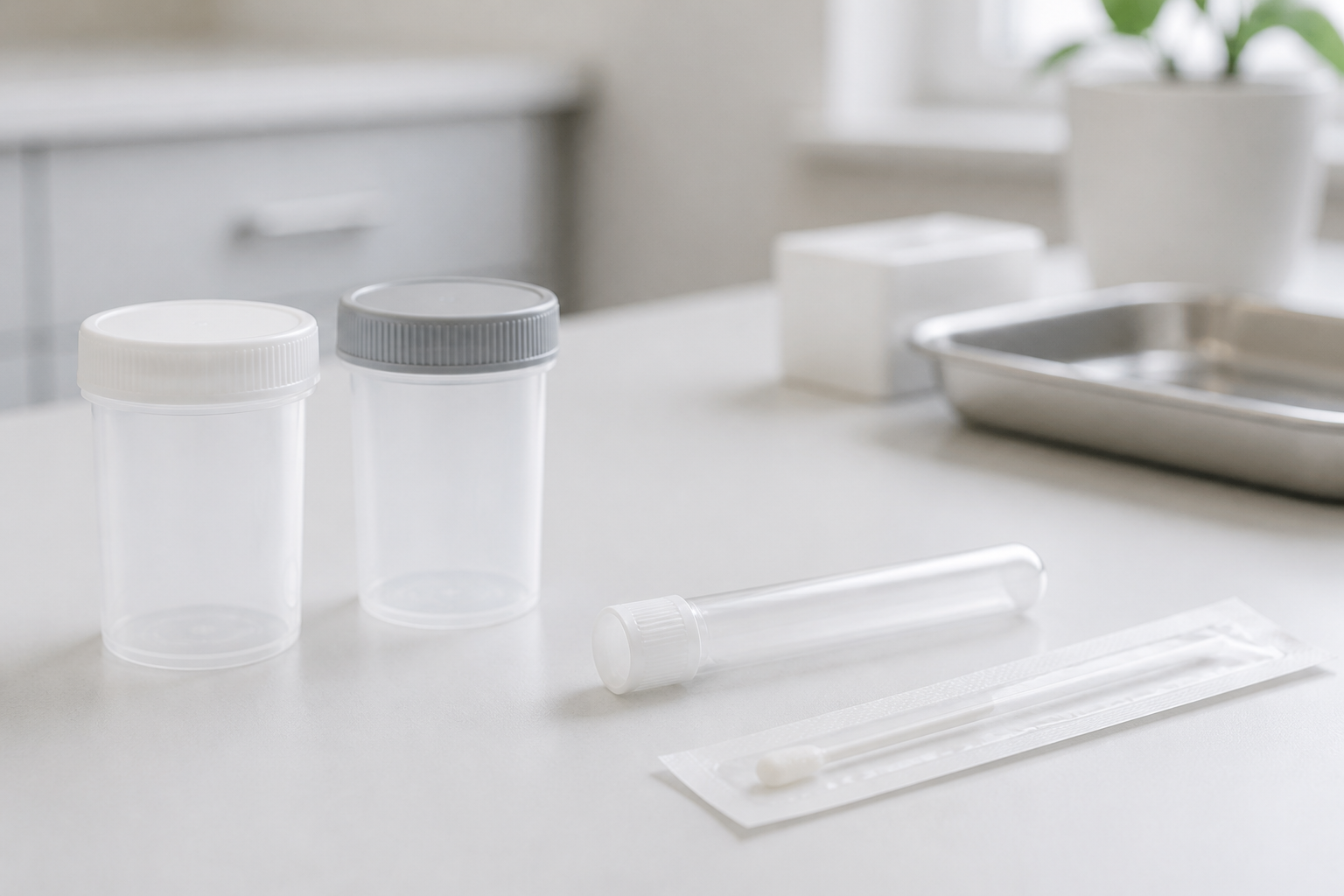
STI testing may involve blood, urine, or swabs from the vagina, throat, or rectum. The appropriate specimen depends on the infection being evaluated, your anatomy, symptoms, sexual practices, and the body sites that may have been exposed. A urine sample is not automatically the right choice for every infection or every exposure, and a negative result from one site does not necessarily address an infection at another exposed site.
- Urine may be used for some testing, including certain chlamydia and gonorrhea tests.
- A vaginal swab may be used for some infections and may be collected by a clinician or, for certain authorized tests, by the patient according to validated instructions.
- Throat or rectal swabs may be relevant when those sites were exposed or symptoms occur there.
- Blood tests may be used for infections for which blood-based testing is appropriate.
The sample type should be selected according to the test's validated instructions and the clinical situation. Do not assume that one sample is universally more accurate than another. FDA information on authorized chlamydia and gonorrhea testing describes urine and vaginal-swab options, while also noting that false-positive and false-negative results remain possible.
How different contraceptive methods fit into the process
People use many forms of hormonal contraception, including pills, patches, injections, implants, hormonal IUDs, and vaginal rings. There is no general instruction to stop these methods before STI testing. Follow the test-specific directions rather than stopping contraception without a clear reason.
A vaginal ring or another product placed inside the vagina deserves a practical question rather than a universal rule. Some assays have instructions about vaginal products, collection technique, or timing. Check the test instructions and tell the clinician or testing service what you use. Do not independently remove or discontinue an intravaginal contraceptive unless the specific instructions or a clinician directs you to do so.
What can affect the testing process?
The factors most relevant to STI testing are usually related to the infection, exposure, specimen, and assay rather than contraception alone. Before testing, consider whether you have symptoms, which body sites were exposed, whether you recently used an intravaginal product, and whether you have taken antibiotics. Share this information so the appropriate test and sample can be considered.
- Exposure site: vaginal, penile, oral, or anal exposure may affect which sites should be tested.
- Specimen type: urine, blood, and swabs are not interchangeable for every infection.
- Collection quality: insufficient, contaminated, or improperly collected specimens can affect results.
- Test timing: the useful timing depends on the infection, test type, and exposure circumstances; there is no single waiting period for every STI.
- Symptoms and products: bleeding, symptoms, blood, lubricants, creams, or other vaginal products may matter for particular assays.
- Treatment or medication history: concurrent antibiotics may affect some assay results and should be reported.
How to prepare for STI testing while on birth control
Preparation is usually straightforward. Keep taking your contraceptive as prescribed unless a clinician tells you otherwise. Read the test instructions before collecting a sample, and do not substitute a different specimen type. Tell the provider about any recent intravaginal products and follow any method-specific instructions for the test. If you had oral or anal exposure, ask whether throat or rectal testing is appropriate.
- Review the test's collection and handling instructions.
- Do not remove a device or stop contraception unless specifically instructed.
- Report symptoms such as unusual sores, pain, discharge, burning, bleeding, or pelvic discomfort.
- Mention recent intravaginal products, blood, or antibiotic use when relevant.
- Ask which infections and exposed sites the test covers.
- Discuss the meaning of a negative, positive, or inconclusive result with a qualified healthcare professional.
When to contact a healthcare professional
Contact a healthcare professional if you have symptoms, a known or possible exposure, or questions about which sites should be tested. Seek individualized guidance if you are pregnant, have HIV, are taking antibiotics, or received an unclear or inconclusive result. A negative result does not automatically rule out infection at every body site or at every point after exposure, so the result must be considered in the context of the test and timing.
The bottom line
For most people, hormonal birth control is not a reason to postpone routine STI testing or stop contraception. The available evidence does not show a general effect of hormonal contraception on STI-test accuracy. The more important questions are which infection is being assessed, which body sites were exposed, what specimen is collected, when testing occurs, and whether the test instructions are followed. Birth control also does not protect against STIs, so prevention and screening decisions should remain separate from pregnancy-prevention decisions.
Frequently asked questions
Can I get an STI test while taking the pill?
Yes. CDC guidance does not identify taking hormonal birth control as a general reason to delay STI testing. Follow the specific test instructions and share relevant symptoms, exposures, and medications.
Should I stop hormonal birth control before an STI test?
Usually, there is no general reason to stop it. Do not discontinue a pill, patch, injection, implant, IUD, or other method unless the test instructions or a clinician specifically tells you to do so.
Does birth control protect against STIs?
No. Hormonal contraception and IUDs prevent pregnancy but do not protect against STIs. Condoms and other prevention measures may still be needed.
Can a vaginal ring interfere with an STI swab?
There is no universal instruction to remove a vaginal ring before every swab. Follow the specific test instructions and ask the clinician or testing service what to do.
Is urine testing enough for every STI exposure?
No. STI testing may use urine, blood, or vaginal, throat, or rectal swabs. The appropriate sample depends on the infection, symptoms, anatomy, sexual practices, and exposed sites.
Can hormonal contraception cause a false-negative STI result?
Current evidence does not establish a general effect of hormonal contraception on STI-test accuracy. Results can be affected by factors such as timing, specimen type, collection quality, assay-specific interference, and technical issues.
Sources & references
- STI Screening Recommendations
- Getting Tested for STIs
- Contraception and Birth Control Methods
- Appendix C: Examinations and Tests Needed Before Initiation of Contraceptive Methods
- U.S. Selected Practice Recommendations for Contraceptive Use, 2024
- FDA Grants Marketing Authorization of First Test for Chlamydia and Gonorrhea with At-Home Sample Collection
- BD ProbeTec ET Chlamydia trachomatis and Neisseria gonorrhoeae Amplified DNA Assays Package Insert
- Hormonal Contraceptives and the Acquisition of Sexually Transmitted Infections: An Updated Systematic Review
- Hormonal contraception alters vaginal microbiota and cytokines in South African adolescents in a randomized trial
- Birth Control
Sources are provided for general educational purposes only. This article is not medical advice. Consult a qualified healthcare professional with any health concerns.
Ready to compare testing options?
Use our independent, educational comparisons to understand your online STD/STI testing options.
View Provider Testing OptionsAffiliate link — we may earn a commission if you choose a provider through this link, at no extra cost to you. Pricing, turnaround and availability are set by the provider and can change.