Should You Urinate Before an STD Urine Test? Timing, Accuracy, and What Matters Most
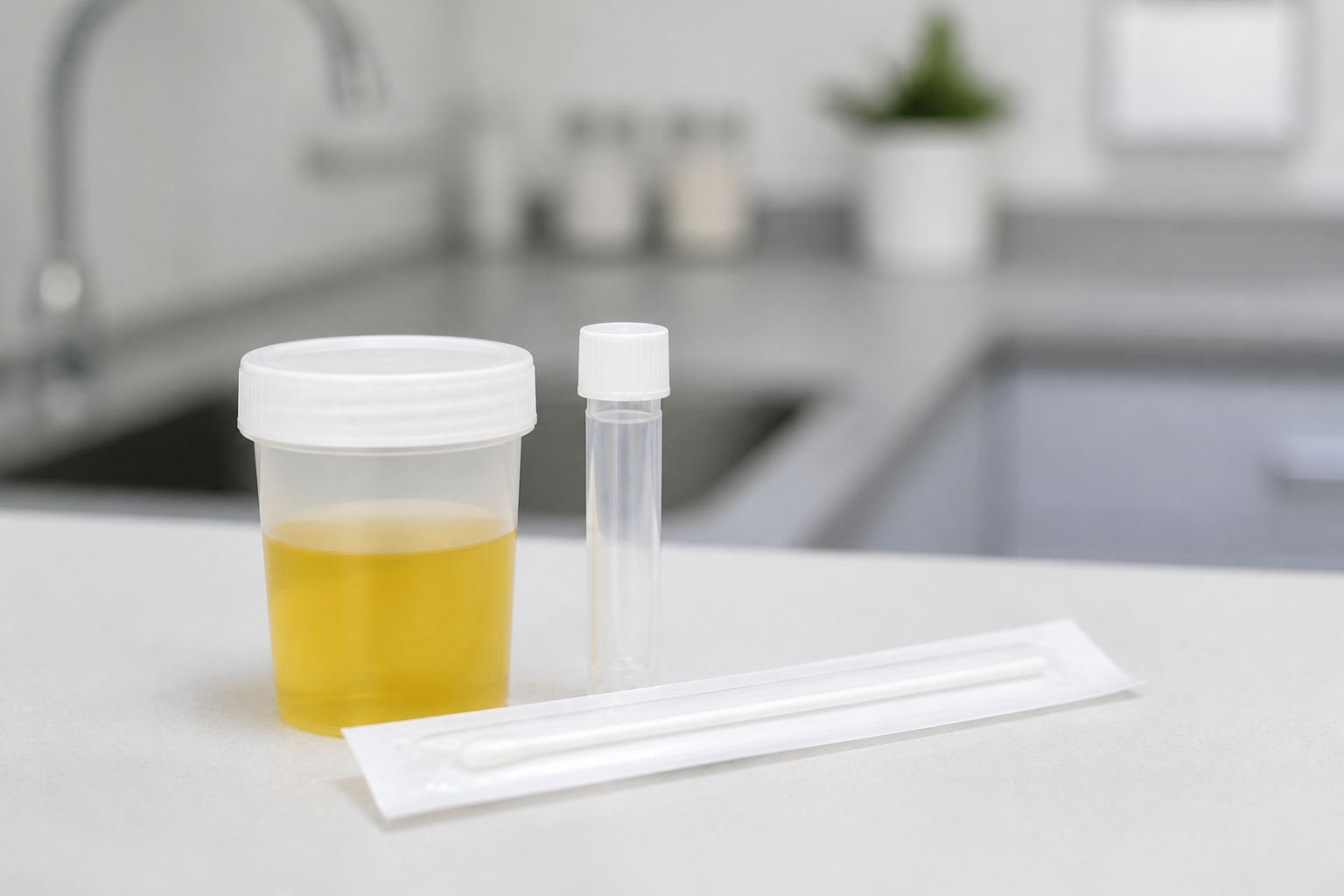
For many chlamydia and gonorrhea urine NAATs, try not to urinate for about an hour before collecting the sample. Use the first part of the stream and follow the laboratory's instructions.
Key takeaways
- For many urine-based chlamydia and gonorrhea NAATs, it is generally helpful, if possible, to wait about 1 hour after urinating before providing the specimen.
- The sample usually needs to be the first part of the urine stream rather than a midstream sample.
- Urinating shortly before collection does not automatically mean the test is invalid or guaranteed to be negative.
- Always follow the instructions from the specific laboratory, collection kit, or testing site.
- Urine testing does not evaluate every possible exposure site; throat or rectal exposure may require site-specific swabs.
Yes, you can urinate before going to an STD testing appointment. However, if you are providing a urine specimen for a common chlamydia or gonorrhea nucleic acid amplification test (NAAT), many collection protocols recommend avoiding urination for about 1 hour before the sample when possible. The sample should generally be the first part of the stream, not midstream urine. These are specimen-collection instructions, not a universal rule for every sexually transmitted infection test or every laboratory.
The important distinction: arriving versus providing the sample
People often hear that they should not urinate before an STD test and interpret that as not using the bathroom before leaving home or before an appointment. The practical concern usually relates to the time immediately before collecting the urine specimen. If you need to urinate before traveling to the testing site, do so rather than becoming uncomfortable or holding your urine for an extended period. When you arrive, explain when you last urinated and ask what the laboratory recommends.
CDC laboratory guidance states that, when possible, urine collection should be delayed until at least 1 hour after the patient has voided. Some FDA-cleared assay instructions similarly specify no urination for at least 1 hour before collection. The exact requirement can vary by assay and laboratory, so a rigid two-hour rule should not be treated as universal.
Why first-catch urine matters
For urine-based chlamydia and gonorrhea NAATs, the collection method matters. First-catch, also called first-void, urine means collecting the initial portion of the stream after urination begins. CDC guidance identifies first-catch or first-void urine as an appropriate or optimal urogenital specimen for these tests, particularly in men.
The initial urine may collect material from the urethra that the test is designed to detect. That is why instructions may ask you not to begin urinating into the toilet and then fill the container. They may instead specify collecting the first portion, often a limited volume. Follow the volume and container instructions provided by the testing site or kit rather than trying to adjust the sample yourself.
- Avoid urinating for the interval specified by the laboratory, if you can do so comfortably.
- Begin urinating and collect the first portion of the stream when instructed.
- Do not substitute a midstream specimen unless the testing site tells you to.
- Use only the supplied container and follow its handling instructions.
- Tell the testing site if you urinated shortly before collection or collected the sample differently.
What if you urinated shortly before the test?
Urinating shortly before collection may not be ideal for some urine-based tests, but it does not automatically make the result invalid, and it does not guarantee a false-negative result. The possible effect depends on the assay, the specimen type, the collection method, the organism, and the time since the last urination. Available evidence does not support presenting a universal waiting period as an absolute requirement for every test.
If you have already urinated, do not hide that information or assume the appointment is pointless. Ask the testing site whether you should wait and collect later, proceed with the sample, or use another specimen type. The laboratory can apply the instructions for the specific assay being used.
Urine is not the right specimen for every exposure
A urine test generally evaluates the urogenital site represented by the specimen. It does not automatically check the throat or rectum. If you have had oral or anal exposure, ask a clinician or testing site whether a pharyngeal or rectal swab is appropriate. The correct specimen depends on the exposure site, symptoms, anatomy, and the test being considered.
For people with a vagina, vaginal swabs may be preferred over urine for some genital chlamydia and gonorrhea testing because urine can detect fewer infections than vaginal or endocervical swabs in certain settings. This does not mean urine testing is never used. It means the most suitable specimen should be selected according to the testing situation and laboratory instructions.
Timing is only one part of test accuracy
Waiting before urine collection is only one consideration. Accuracy can also depend on whether the sample came from the correct anatomic site, whether the first portion of urine was collected, the amount collected, the assay used, and how the specimen was handled. Follow the instructions from the testing site or laboratory for the assay and specimen being used.
A negative urine result should not be used to rule out an infection at a site that was not tested. It also should not be used to ignore symptoms or a known exposure. If you have symptoms, have been told you may have been exposed, or are concerned about a result, contact a healthcare professional or the testing site for individualized guidance.
Questions to ask before collecting a urine sample
- How long should I avoid urinating before providing the specimen?
- Should I collect first-catch urine or a midstream sample?
- How much urine should I provide?
- Which infections and anatomic sites does this specimen evaluate?
- Do I need a throat, rectal, vaginal, or other swab based on my exposure?
- What should I do if I already urinated?
Bottom line
For many chlamydia and gonorrhea urine NAATs, try, if possible, not to urinate for about 1 hour before giving the sample. Provide the first part of the stream rather than midstream urine, and follow the exact instructions from the laboratory or collection kit. If you urinated sooner, do not automatically cancel or assume the result will be inaccurate; tell the testing site and ask what it recommends. Remember that urine checks only the site represented by the specimen, so other exposures may call for site-specific swabs.
Frequently asked questions
How long should I wait to urinate before an STD urine test?
For many chlamydia and gonorrhea urine NAATs, collection guidance commonly recommends waiting at least 1 hour after urinating when possible. Follow the specific laboratory or kit instructions because requirements vary.
What happens if I urinate before a chlamydia or gonorrhea urine test?
It may be less than ideal for some collection protocols, but it does not automatically make the test invalid or guarantee a false-negative result. Tell the testing site when you last urinated and ask whether to wait or proceed.
Should an STD urine sample be first catch or midstream?
For many chlamydia and gonorrhea NAATs, first-catch or first-void urine is requested. This means collecting the initial portion of the stream. Use the exact instructions supplied by the laboratory.
Do I need to hold my urine for two hours before every STD test?
No universal two-hour rule applies to every STD test or assay. The commonly cited interval can vary, and many protocols use about 1 hour. Follow the instructions for your specific test.
Can a urine test detect oral or rectal chlamydia and gonorrhea?
A urine specimen does not automatically evaluate the throat or rectum. Based on exposure, site-specific throat or rectal swabs may be needed.
Are vaginal swabs better than urine for some people?
CDC materials note that urine may detect fewer genital infections than vaginal or endocervical swabs in some settings. The appropriate specimen depends on anatomy, exposure, symptoms, and the test.
Sources & references
- CDC Chlamydial Infections: STI Treatment Guidelines
- CDC Gonococcal Infections Among Adolescents and Adults
- CDC Recommendations for Laboratory-Based Detection of Chlamydia trachomatis and Neisseria gonorrhoeae
- CDC Laboratory Diagnosis Guidance, Urine Specimens
- BD ProbeTec ET CT/GC Amplified DNA Assay Package Insert
- USPSTF Recommendation: Chlamydia and Gonorrhea Screening
- The significance of voiding interval before testing urine samples for Chlamydia trachomatis in men
- Mayo Clinic Laboratories CT/GC NAAT Collection Instructions
Sources are provided for general educational purposes only. This article is not medical advice. Consult a qualified healthcare professional with any health concerns.
Ready to compare testing options?
Use our independent, educational comparisons to understand your online STD/STI testing options.
View Provider Testing OptionsAffiliate link — we may earn a commission if you choose a provider through this link, at no extra cost to you. Pricing, turnaround and availability are set by the provider and can change.